
Digital Health Identity
Starts With You
Your Digital Health Identity: Who Do You Trust with Your Data?
Every day, millions of people share their most personal information genetic data, heart rate, sleep patterns with companies that promise insight and convenience. But how secure is this data, and who really owns it?
This website explores how genetic testing services and wearable technologies are transforming healthcare and how this transformation raises new questions about privacy, consent, and digital trust.
“Our DNA is the most personal data we have. Yet we hand it over for curiosity and convenience.”
“Our DNA is the most personal data we have. Yet we hand it over for curiosity and convenience.”
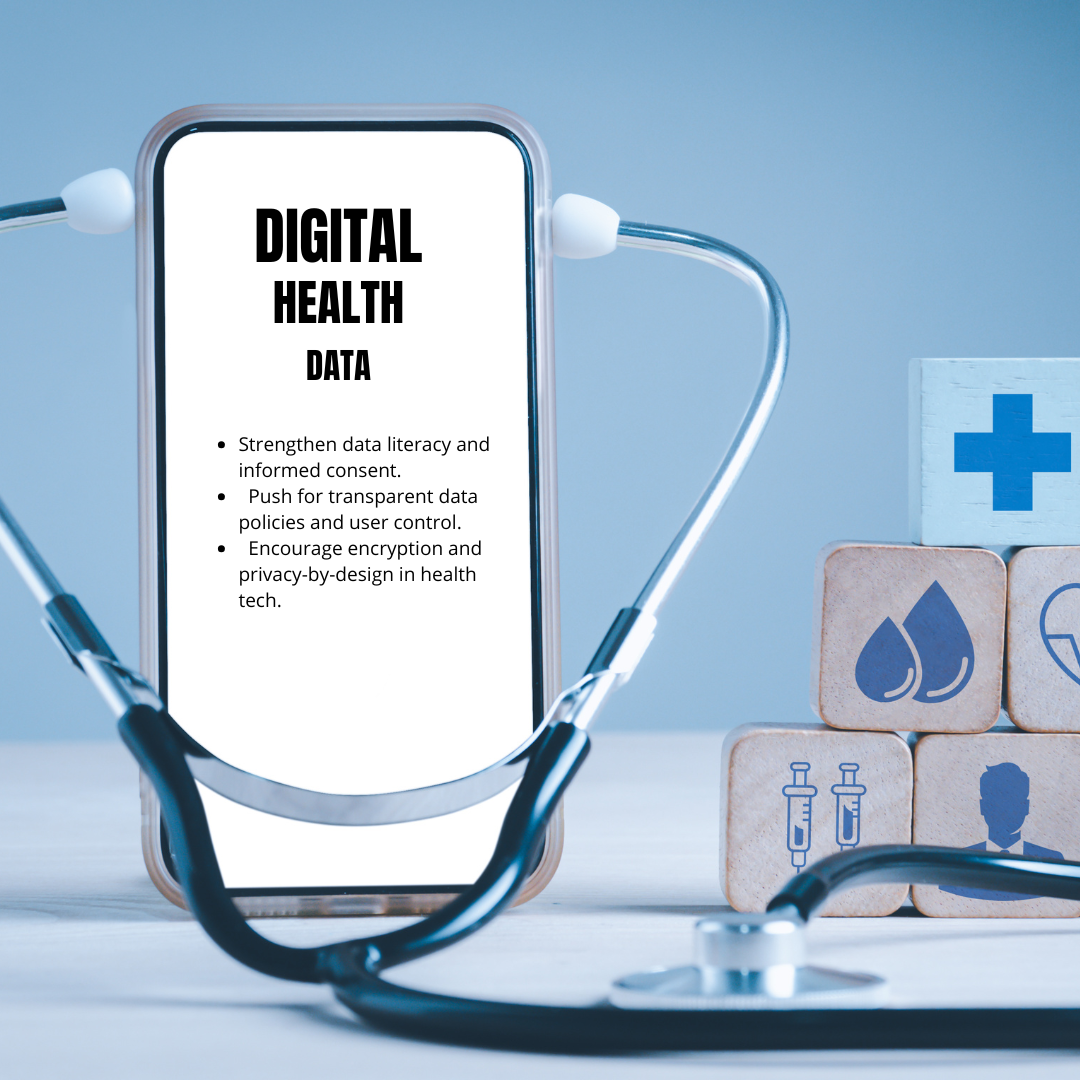
Balancing innovation with privacy protection.
Key Facts About Digital Health Data:
Digital Health Data Includes More Than Just Medical Records It covers electronic health records (EHRs), lab results, prescriptions, wearable device data (like heart rate from smartwatches), telehealth session notes, and health apps.
Over 30 million people have submitted DNA to testing companies.
Health data from wearables is often stored unprotected on cloud servers .
Only 12% of users read data-sharing terms before consenting.
AI models now predict disease risk using aggregated user data.
Health data breaches have tripled since 2020 .
It’s Governed by Privacy Laws (e.g., HIPAA in the U.S.)
You Have the Right to Access Your Health Data
Wearables and Health Apps Also Collect Sensitive Information

Take Action
Key ways to safeguard yourself from Digital Health Records (DHR) breaches and medical identity theft :
Unique Passwords
Use Strong, Unique Passwords and Enable Multi-Factor Authentication (MFA)
Monitor Your Medical
Check for unfamiliar treatments, prescriptions, or bills.
Limit Sharing of PHI
Only provide medical or insurance details on verified, secure platforms
Public Wi-Fi and Devices
Never access health records or insurance accounts over unsecured Wi-Fi
Recovery
Freeze or alert your credit.
Contact your healthcare providers and insurer
Practical tips and prevention
Limit Sharing of Personal Health Information (PHI)